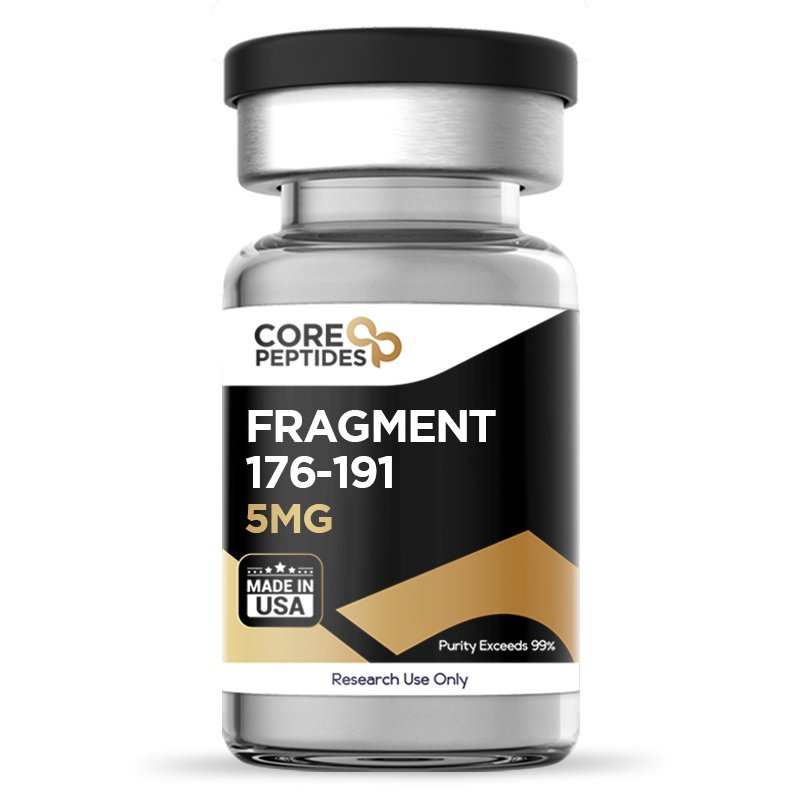
HGH 176-191

Price range: $58.00 through $82.00
Here is the copy-paste friendly short description for HGH 176-191, optimized for quick reading and high search engine visibility.
Oder HGH 176-191 (5mg) – Targeted Lipolytic Fragment
Accelerate your metabolic research with HGH 176-191, the specific C-terminal fragment of Human Growth Hormone engineered for isolated fat metabolism. Known as the “Lipolytic Fragment,” this 16-amino acid peptide is designed to stimulate lipolysis and inhibit lipogenesis without the growth-promoting or glucose-altering effects associated with full-length HGH.
Product Highlights:
-
Selective Fat Oxidation: Targets adipose tissue directly, stimulating the breakdown of fat cells (lipolysis) with high precision.
-
Metabolic Stability: Studied for its ability to reduce body fat without affecting insulin sensitivity or blood glucose levels.
-
Pure Lipolytic Action: Does not stimulate IGF-1 production or cellular proliferation, making it ideal for pure metabolic studies.
-
Scientific Excellence: Guaranteed 98% or higher purity (HPLC/MS verified) in a stable, lyophilized format.
HGH 176-191 is the gold standard for laboratory models focusing on obesity research, lipid metabolism, and body composition optimization without systemic growth hormone side effects.
HGH 176-191: The Targeted Lipolytic Fragment for Advanced Metabolic Research
When you incorporate HGH 176-191 into your laboratory protocols, you are utilizing a specific, stabilized fragment of the C-terminus of Human Growth Hormone. Often referred to as the “Frag 176-191” or the “Lipolytic Fragment,” this peptide is a synthetic 16-amino acid chain that isolates the fat-reducing properties of GH. It is widely recognized in the scientific community for its ability to target adipose tissue without affecting blood glucose levels or insulin sensitivity.
What is HGH 176-191?
HGH 176-191 is a specialized peptide fragment that mimics the way natural growth hormone regulates fat metabolism. Unlike the full 191-amino acid HGH molecule, this fragment does not bind to growth hormone receptors (GHR). Because of this, it does not stimulate the production of IGF-1, nor does it cause cellular proliferation (growth).
Instead, it functions solely by stimulating lipolysis (the breakdown of fat) and inhibiting lipogenesis (the formation of new fatty acids). This makes it an invaluable tool for researchers studying obesity, metabolic syndrome, and lipid oxidation pathways.
[Image showing the 191-amino acid HGH chain with the 176-191 fragment highlighted]
Key Research Benefits and Mechanism of Action
Utilizing HGH 176-191 in experimental models provides a unique window into non-hormonal fat metabolism:
-
Potent Lipolysis: Research indicates that the 176-191 fragment is up to 12.5 times more potent than the full HGH molecule for stimulating the breakdown of adipose tissue.
-
Inhibition of Lipogenesis: Beyond burning fat, it is studied for its ability to prevent the conversion of non-fatty foods into body fat in research models.
-
Glycemic Stability: Unlike full-length HGH, this fragment does not compete for insulin receptors, meaning it does not cause the hyperglycemia or “insulin resistance” often associated with growth hormone research.
-
Lean Tissue Preservation: Because it specifically targets lipid metabolism, it is a primary subject in studies focused on improving body composition without affecting organ size or skeletal growth.
Technical Specifications
To ensure the accuracy of your research data, confirm that your HGH 176-191 meets these rigorous laboratory standards:
-
CAS Number: 221231-10-3
-
Molecular Formula: C78H125N23O23S2
-
Molecular Weight: 1817.1 g/mol
-
Sequence: Tyr-Leu-Arg-Ile-Val-Gln-Cys-Arg-Ser-Val-Glu-Gly-Ser-Cys-Gly-Phe
-
Purity: 98% or higher (HPLC and Mass Spectrometry verified)
-
Appearance: Fine white lyophilized powder
-
Solubility: Soluble in Water or Sterile Saline
Handling and Storage Guidelines
To maintain the structural integrity and bioactivity of HGH 176-191:
-
Storage: Store the lyophilized powder at -20°C for short-term use. For long-term preservation (over 12 months), -80°C is required to prevent peptide oxidation.
-
Reconstitution: Use sterile water or bacteriostatic water. Introduce the diluent gently and allow the vial to sit until the powder is fully dissolved; do not shake or vortex.
-
Stability: Once reconstituted, the fragment is fragile. Store at 2°C to 8°C and use within 7 to 10 days for optimal experimental results.
Why Research with HGH 176-191?
In the current research landscape of 2026, HGH 176-191 remains the “gold standard” for isolating lipolytic effects from growth-promoting effects. Its ability to provide a “clean” look at fat oxidation without the interference of the IGF-1 axis makes it a superior choice for metabolic and obesity studies. Always ensure your supplier provides a full Certificate of Analysis (CoA) to verify the sequence and purity.
Research Disclaimer: This product is intended strictly for laboratory research and in vitro use.
| Quantity | 2mg*10vials, 5mg*10vials |
|---|
Be the first to review “HGH 176-191”
Related products
Product
Product
Product
Product
Product
Product
Product
Reviews
There are no reviews yet.