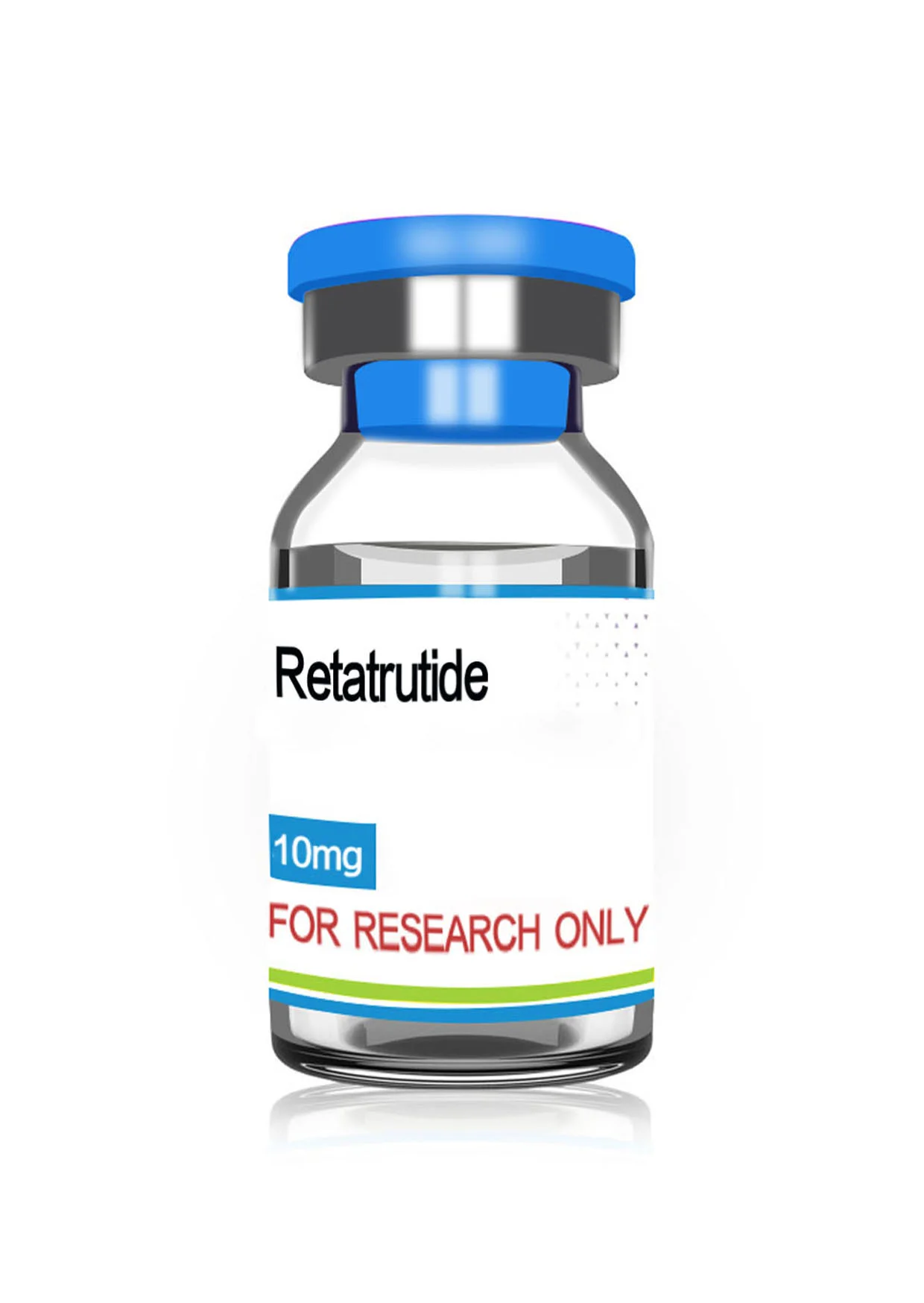
Buy Retatrutide

Price range: $159.00 through $720.00
Buy Retatrutide (5mg) – Next-Generation GIP/GLP-1/GCG Triple Receptor Agonist
Unlock the future of metabolic research with Retatrutide, the most potent “triple-agonist” peptide currently available for laboratory study. By simultaneously targeting the GIP, GLP-1, and Glucagon (GCG) receptors, Retatrutide offers a multi-dimensional approach to investigating obesity, Type 2 Diabetes, and metabolic dysfunction. Its unique inclusion of glucagon receptor agonism allows researchers to study increased thermogenesis and rapid hepatic fat clearance, setting it apart from dual-agonist precursors.
Product Highlights:
-
Triple-Action Signaling: Simultaneously activates three hormonal pathways for synergistic metabolic regulation.
-
Enhanced Energy Expenditure: A primary subject for research into glucagon-mediated fat oxidation and increased basal metabolic rate.
-
Superior Hepatology Tool: Highly effective for studying the reduction of liver fat content in MASLD and NAFLD models.
-
Laboratory Grade: Guaranteed 99% or higher purity (HPLC/MS verified) with a C20 fatty acid side chain for an optimized 6-day half-life.
When you buy Retatrutide for your research facility, you are securing a high-fidelity compound designed to push the boundaries of energy homeostasis and weight-loss plateau research.
Note: For laboratory research use only
Buy Retatrutide: The Definitive Guide to the Triple G (GLP-1/GIP/GCG) Receptor Agonist
In the rapidly advancing landscape of metabolic pharmacology, Retatrutide (codenamed LY3437943) stands as the vanguard of “triple-agonist” therapy. When you look to buy Retatrutide for your research facility, you are acquiring one of the most complex and potent peptides ever developed for the study of obesity, Type 2 Diabetes, and Non-Alcoholic Fatty Liver Disease (NAFLD).
As a single peptide that targets three distinct hormonal pathways—the Glucagon-Like Peptide-1 (GLP-1), Gastric Inhibitory Polypeptide (GIP), and Glucagon (GCG) receptors—Retatrutide offers a multi-dimensional approach to metabolic research that exceeds the capabilities of previous mono or dual-agonist compounds.
 Figure 1: The 39-amino acid sequence and acylation of Retatrutide.
1. What is Retatrutide? Molecular Composition
Retatrutide is a synthetic 39-amino acid peptide that has been strategically modified to achieve high-affinity binding across three key metabolic receptors. Its backbone is based on the GIP sequence but is heavily engineered to include:
- AIB (Alpha-aminoisobutyric acid): Placed at specific positions to prevent enzymatic degradation by DPP-4.
- Acylation (Fatty Acid Side Chain): A C20 fatty diacid moiety that allows the peptide to bind reversibly to albumin, extending its research half-life to approximately 6 days.
When researchers buy Retatrutide, they are working with a compound synthesized to 99% purity, ensuring that the delicate balance of triple-receptor activation remains uncompromised by impurities or truncated sequences.
Technical Chemical Profile
| Sequence | 39-amino acid acylated peptide |
| Molecular Mechanism | GIP / GLP-1 / Glucagon Triple Receptor Agonist |
| Molecular Weight | Approximately 4731.33 g/mol |
| Format | Lyophilized sterile powder |
2. The Triple-Agonist Mechanism: A Synergy of Signaling
The decision to buy Retatrutide for laboratory inquiry allows for the investigation of a unique metabolic synergy. By activating three pathways simultaneously, Retatrutide addresses energy balance from three distinct angles:
A. GIP (Gastric Inhibitory Polypeptide) Receptor Agonism
GIP is often referred to as the “foundational” hormone in this triple-hit approach. In research models, GIP agonism is studied for its ability to improve insulin sensitivity and mitigate the nausea often associated with GLP-1 activation.
B. GLP-1 (Glucagon-Like Peptide-1) Receptor Agonism
The GLP-1 pathway is the industry standard for appetite suppression. It acts on the hypothalamus to reduce food intake and slows gastric emptying. Researchers utilize Retatrutide to observe how the GLP-1 component interacts with GIP and Glucagon.
C. GCG (Glucagon) Receptor Agonism
This is the “special sauce” of Retatrutide. While traditionally glucagon was thought to raise blood sugar, chronic GCG agonism in the presence of GLP-1/GIP has been shown to increase energy expenditure (thermogenesis) and promote fatty acid oxidation in the liver.
3. Leading-Edge Research Applications: Obesity and NAFLD
The primary motivation for many institutions to buy Retatrutide is its unparalleled performance in preclinical weight loss models.
- Profound Weight Reduction: Investigating results that may exceed Tirzepatide by leveraging the thermogenic power of glucagon.
- Hepatology and MASLD: Focused on the ability to “clear” liver fat more rapidly than GLP-1 mono-therapies.
- Cardiovascular Metabolic Health: Ongoing research into how triple-agonism influences blood pressure and lipid profiles.
4. Technical Specifications and Synthesis Standards
To maintain the integrity of high-fidelity metabolic data, our Retatrutide meets elite-level laboratory standards:
- Verified Purity: 99%+ purity verified via HPLC and Mass Spectrometry.
- TFA Removal: Synthesis process includes the removal of Trifluoroacetic acid for cell culture safety.
- Vacuum Sealing: Every vial is vacuum-sealed to prevent oxidation of sensitive residues.
5. Handling, Reconstitution, and Storage
Triple-agonists like Retatrutide are highly sensitive. Proper handling is essential:
Reconstitution
- Use Bacteriostatic Water or sterile saline as the diluent.
- Allow the diluent to run slowly down the interior wall of the vial.
- Do not shake. Gently swirl the vial in a circular motion until clear.
Storage Stability
- Lyophilized (Dry): Store at -20°C for up to 24 months.
- Reconstituted (Liquid): Keep refrigerated at 2°C to 8°C. Use within 14 days.
6. Why Buy Retatrutide for 2026 Research?
As we move into 2026, scientific consensus is shifting toward multi-pathway intervention. By choosing to buy Retatrutide, your laboratory is positioned at the frontier of:
- Energy Expenditure Studies: Investigating increased metabolic rate at rest.
- Insulin Resistance Frontiers: Exploring reversal of dysfunction via GIP signaling.
- Adipose Tissue Remodeling: Studying the “browning” of white fat cells.
7. Quality Assurance and Batch Verification
When your protocol requires you to buy Retatrutide, ensure your supplier provides:
- Batch-Specific CoA: Real-time testing data for your specific vial.
- Sequence Confirmation: Verification of the 39-amino acid chain arrangement.
- Endotoxin Testing: Critical for in vivo research safety.
8. Summary of Scientific Potential
Retatrutide represents the current “ceiling” of peptide-based metabolic intervention. Its ability to harmonize three different hormonal signals into a single, long-acting molecule is a marvel of modern bioengineering. Whether your research is focused on hepatic steatosis or peak weight-loss plateaus, Retatrutide provides the most robust pharmacological profile available today.
| Quantity | 5mg*10vials, 10mg*10vials, 25mg*10vials, 30mg*10vials, 1g raw, 100g or kg raw |
|---|
Be the first to review “Buy Retatrutide”
Related products
Product
Product
Product
Product
Product
Product

Product
Reviews
There are no reviews yet.