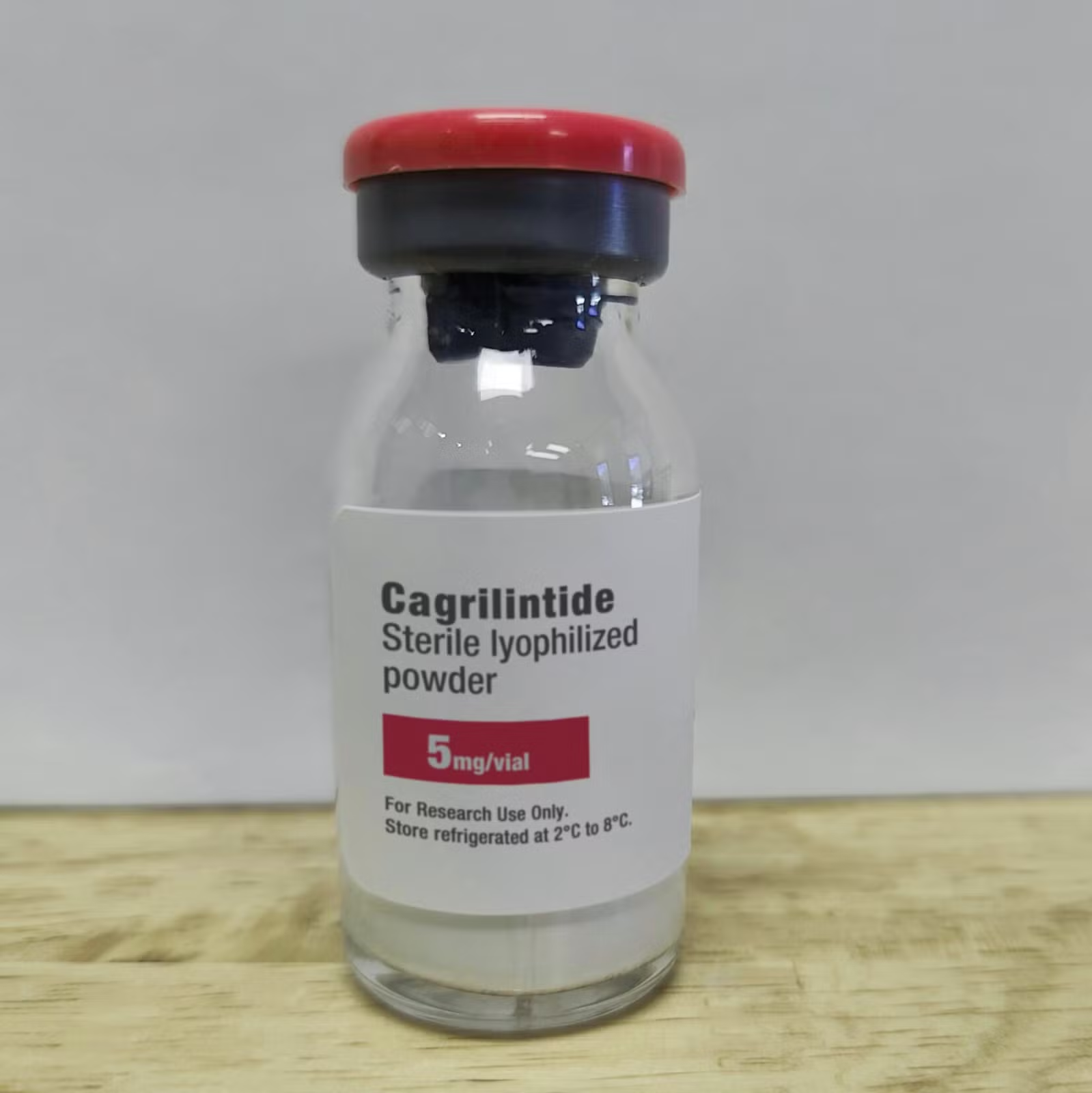
Buy Cagrilintide
Price range: $119.00 through $930.00
Buy Cagrilintide (5mg) – Long-Acting Amylin Receptor Agonist (NARA)
Advance your metabolic studies with Cagrilintide, a high-purity acylated analogue of the human hormone amylin. Engineered for superior stability and an extended half-life, Cagrilintide is a premier research tool for investigating the complex pathways of satiety, gastric emptying, and glucose homeostasis. It is currently a primary subject in “dual-agonist” research, often studied in conjunction with GLP-1 receptor agonists to explore synergistic weight management outcomes.
Product Highlights:
-
Targeted Satiety Signaling: Acts as a non-selective agonist of both amylin and calcitonin receptors to signal fullness in the hindbrain.
-
Extended Pharmacokinetics: Acylated structure allows for prolonged bioactivity, making it ideal for chronic research models.
-
Glycemic Control Research: Studied for its role in regulating gastric emptying and suppressing postprandial glucagon secretion.
-
Laboratory Grade: Guaranteed 99% or higher purity (HPLC/MS verified) in a stable, vacuum-sealed lyophilized format.
When you buy Cagrilintide for your laboratory facility, you are choosing a cutting-edge secretagogue designed to provide stable, reproducible data in the frontier of metabolic and obesity research.
Note: For laboratory research use only.
Buy Cagrilintide: The Researcher’s Guide to the Long-Acting Amylin Analogue
In the rapidly expanding field of metabolic research, Cagrilintide has emerged as a groundbreaking non-selective amylin receptor agonist (NARA). When you look to buy Cagrilintide, you are investing in a specialized peptide designed to investigate the complex pathways of satiety, glucose homeostasis, and weight regulation.
As a long-acting analogue of the naturally occurring hormone amylin, Cagrilintide represents the next generation of obesity research tools. Unlike previous amylin mimetics, Cagrilintide is engineered for prolonged bioactivity, making it a primary subject for studies involving chronic weight management and synergistic metabolic treatments.
 Figure 1: Molecular structure of acylated Cagrilintide.
1. What is Cagrilintide? A Molecular Perspective
Cagrilintide is an acylated analogue of human amylin. Amylin is a peptide hormone co-secreted with insulin by the pancreatic beta cells in response to nutrient intake. While insulin manages glucose disposal, amylin plays a critical role in regulating the rate of nutrient entry into the small intestine and signaling satiation to the brain.
The challenge with native amylin is its extremely short half-life and tendency to aggregate. When researchers buy Cagrilintide, they are working with a modified sequence that has been acylated with a fatty acid moiety. This modification allows the peptide to bind reversibly to albumin, extending its half-life significantly and allowing for a steady-state presence in research models.
Technical Chemical Profile
- Sequence: Modified human amylin analogue with acylation
- Molecular Mechanism: Non-selective agonist of amylin receptors (AMYR) and calcitonin receptors (CTR)
- Purity: ≥99% (Verified by HPLC/MS)
- Format: Lyophilized sterile powder
2. Mechanism of Action: Satiety and Beyond
The decision to buy Cagrilintide for laboratory inquiry is driven by its unique dual-pathway signaling. It operates primarily through the hindbrain, specifically the area postrema (AP) and the nucleus tractus solitarius (NTS).
A. Gastric Emptying Regulation
Cagrilintide slows the rate of gastric emptying. In research models, this leads to a more gradual absorption of glucose into the bloodstream, reducing postprandial glycemic spikes. This makes it an invaluable tool for studying the prevention of metabolic syndrome.
B. Hypophagic Effects (Appetite Suppression)
Unlike GLP-1 receptor agonists that focus heavily on the gut-brain axis, Cagrilintide acts as a potent satiety signal. It informs the central nervous system that the body has achieved fullness. Researchers use this peptide to observe significant reductions in food intake (hypophagia) without the “rebound hunger” often seen with shorter-acting compounds.
C. Glucagon Suppression
Cagrilintide has been observed to suppress the inappropriate secretion of glucagon after meals. By balancing the relationship between insulin and glucagon, it provides a holistic look at pancreatic endocrine function.
3. Synergy Research: Cagrilintide and Semaglutide
Perhaps the most exciting area for those looking to buy Cagrilintide in 2026 is its synergistic potential. Recent preclinical data suggests that Cagrilintide works exceptionally well when studied alongside GLP-1 analogues like Semaglutide.
While GLP-1 primarily targets the hypothalamus and gut, Cagrilintide targets the hindbrain. This “dual-hit” approach to the brain’s satiety centers is a major frontier in obesity research. Studies are currently investigating whether this combination can produce weight loss results that exceed those of either peptide alone.
 Figure 2: Potential synergistic pathways in the brainstem.
4. Technical Specifications and Research Standards
To ensure the integrity of your experimental data, the Cagrilintide you purchase must meet elite-level standards:
- Purity Levels: We provide Cagrilintide at 99%+ purity, ensuring that residual solvents do not interfere with receptor binding assays.
- Bioactivity: Each batch is tested for its ability to activate the amylin receptor complex in vitro.
- Stability: Provided in a vacuum-sealed, lyophilized format to ensure structural integrity during shipping.
5. Handling, Reconstitution, and Storage
Peptides of this complexity require precise handling to maintain their 3D conformational structure.
Reconstitution
- Use Bacteriostatic Water or sterile saline for research injections.
- Important: Ensure your diluent is at a neutral pH to prevent peptide precipitation.
- Do not vortex. Gently tilt the vial until the solution is clear and colorless.
Storage Stability
- Lyophilized (Dry): Store at -20°C for up to 24 months.
- Reconstituted (Liquid): Keep refrigerated at 2°C to 8°C. Use within 14–21 days.
6. Why Buy Cagrilintide for 2026 Research?
As the “second wave” of metabolic peptides reaches the research market, Cagrilintide stands out because it addresses the previously underutilized amylin pathway. For laboratories focusing on:
- Treatment-Resistant Obesity: Exploring failures in response to GLP-1 alone.
- Type 2 Diabetes: Studying the preservation of beta-cell function.
- Cardiovascular Health: Investigating the link between weight reduction and cardiac strain.
7. Quality Assurance and Sourcing
When your objective is to buy Cagrilintide, your supplier must provide:
- Batch-Specific CoA: High-performance liquid chromatography (HPLC) and Mass Spec (MS) reports.
- TFA Removal: Ensuring the peptide is free from Trifluoroacetic acid.
- Inert Packaging: Vials crimp-sealed with pharmaceutical-grade stoppers.
8. Summary of Scientific Potential
Cagrilintide is more than just a weight-loss candidate; it is a probe into the very nature of human energy regulation. Its ability to provide sustained, long-acting amylin agonism allows for a more stable research environment. Whether you are investigating its solo effects or its potent synergy with other secretatogues, Cagrilintide is an indispensable asset for any modern metabolic lab.
| Quantity | 2mg*10vials, 5mg*10vials, 10mg*10vials, 1g raw, 100g or kg raw |
|---|
Be the first to review “Buy Cagrilintide”
Related products
Product
Product
Product
Product
Product
Product
Product
Reviews
There are no reviews yet.