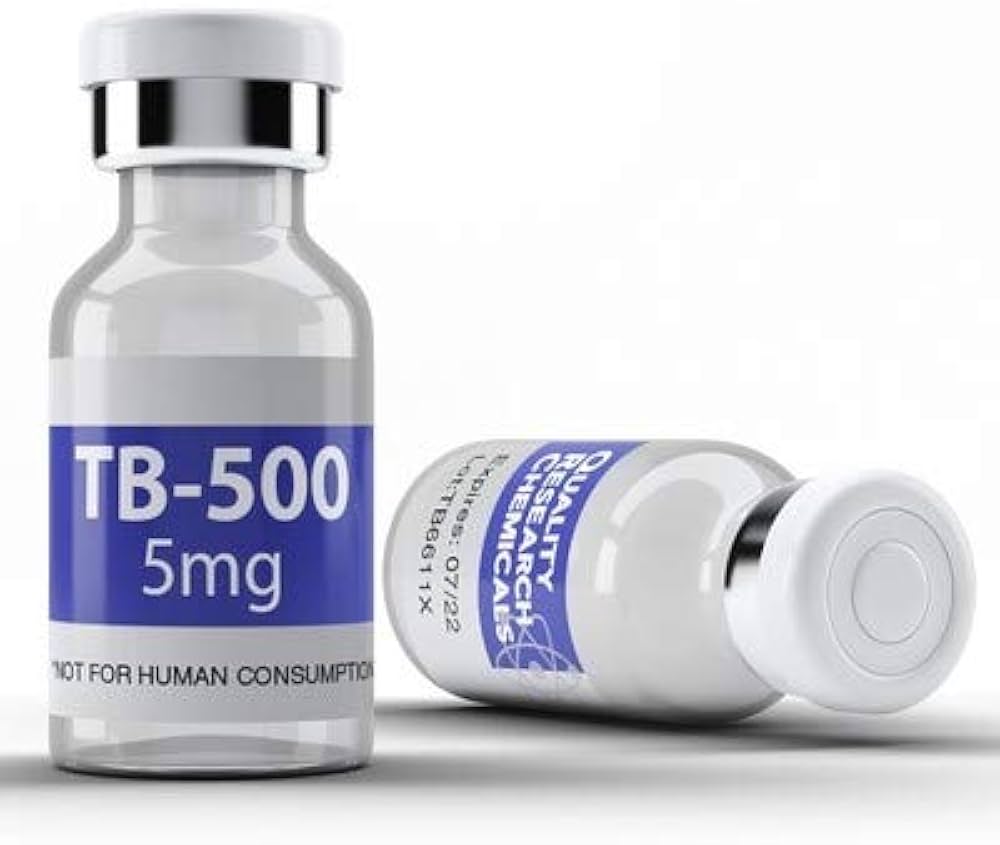
TB-500 (THYmosin B4 Acetate)
Price range: $51.00 through $120.00
Buy TB-500 (5mg) – High-Purity Synthetic Thymosin Beta-4 Analogue
Accelerate your tissue regeneration research with TB-500, the high-potency synthetic analogue of Thymosin Beta-4. Specially engineered for its low molecular weight and high mobility, TB-500 is a critical research tool for studying cellular migration, actin polymerization, and the systemic repair of musculoskeletal and cardiovascular tissues.
Product Highlights:
-
Actin-Sequestering Action: Primary subject for research into cell cytoskeleton regulation and myofascial repair.
-
Angiogenic Properties: Studied for its ability to promote the growth of new blood vessels and support ischemic tissue recovery.
-
Enhanced Mobility: Its unique structure allows for rapid migration through biological tissues to reach sites of injury in research models.
-
Laboratory Grade: Guaranteed 99% or higher purity (HPLC/MS verified) in a stable, lyophilized format.
TB-500 is the preferred choice for laboratory researchers requiring a stable, bio-active peptide to investigate the cutting edge of regenerative medicine and anti-inflammatory signaling.
> Note: For laboratory research use only.
TB-500: High-Purity Synthetic Thymosin Beta-4 Analogue for Regenerative Research
When your laboratory protocols require a potent mediator of cellular motility and tissue repair, TB-500 (a synthetic version of the naturally occurring peptide Thymosin Beta-4) is the industry standard. Consisting of a 43-amino acid sequence, this regenerative peptide is a primary subject of study in the fields of wound healing, cardiovascular recovery, and musculoskeletal inflammation.
Unlike many growth factors, TB-500 possesses a low molecular weight, allowing it to migrate easily through tissues and travel long distances to sites of injury. This makes it a critical tool for researchers investigating systemic healing mechanisms and the upregulation of cell-building proteins like actin.
Why Technical Purity Matters in TB-500 Research
Because TB-500 functions by binding to G-actin and promoting cell migration, the structural integrity of the peptide is paramount. Even minor sequence errors or impurities can inhibit receptor binding, leading to failed experimental outcomes. Our TB-500 is synthesized to 99% purity, ensuring that your research into angiogenesis and myofascial repair yields consistent, high-fidelity data.
Core Research Mechanisms and Elaborate Benefits
Utilizing TB-500 in a controlled research environment provides deep insights into the following physiological processes:
-
Actin Polymerization: This Synthetic Thymosin is a major actin-sequestering protein. It is studied for its ability to regulate the cell cytoskeleton, which is essential for cell movement, division, and structural maintenance.
-
Angiogenesis (Blood Vessel Formation): Research indicates that TB-500 stimulates the growth of new blood vessels from existing ones. This is a vital area of study for researchers focused on ischemic tissue recovery and heart health.
-
Dermal and Corneal Healing: It is a leading candidate for research into the repair of “slow-to-heal” tissues, including deep skin wounds and corneal injuries, due to its ability to decrease inflammation and increase collagen deposition.
-
Reduced Inflammation and Oxidative Stress: Laboratory models suggest that TB-500 can modulate the inflammatory response, potentially protecting neural and cardiac tissues from acute damage.
Technical Specifications
To ensure the reliability of your study, confirm these technical standards for TB-500:
-
Full Name: Thymosin Beta-4 (Synthetic Analogue)
-
CAS Number: 77591-33-4
-
Molecular Formula: $C_{212}H_{350}N_{56}O_{78}S_{1}$
-
Molecular Weight: 4963.5 g/mol
-
Sequence: Ac-Ser-Asp-Lys-Pro-Asp-Met-Ala-Glu-Ile-Glu-Lys-Phe-Asp-Lys-Ser-Lys-Leu-Lys-Lys-Thr-Glu-Thr-Gln-Glu-Lys-Asn-Pro-Leu-Pro-Ser-Lys-Glu-Thr-Ile-Glu-Gln-Glu-Lys-Gln-Ala-Gly-Glu-Ser
-
Purity: ≥99% (HPLC and Mass Spectrometry verified)
-
Format: Lyophilized white powder (sterile vial)
Handling and Storage Guidelines
To preserve the bioactivity of TB-500 after purchase:
-
Storage: Store the lyophilized powder at -20°C. For long-term preservation exceeding 12 months, -80°C is recommended to prevent peptide oxidation.
-
Reconstitution: Use sterile water or bacteriostatic water. Do not shake or vortex the vial; allow the diluent to dissolve the powder via gentle tilting to maintain the 43-amino acid chain integrity.
-
Post-Reconstitution Stability: Once in solution, keep refrigerated at 2°C to 8°C. For peak performance, the solution should be utilized within 10 to 14 days.
Why Research with TB-500 in 2026?
As regenerative medicine enters a new era, TB-500 remains one of the most versatile peptides for investigating how the body repairs its most complex structures. Its ability to cross the blood-brain barrier and its non-species-specific nature make it a robust candidate for a wide array of mammalian research models. Always ensure your supplier provides a batch-specific Certificate of Analysis (CoA) to guarantee the absence of residual solvents.
Research Disclaimer: This product is intended strictly for laboratory research and in vitro use.
| Quantity | 2mg*10vials, 5mg*10vials, 10mg*10vials |
|---|
Be the first to review “TB-500 (THYmosin B4 Acetate)”
Related products
Product
Product

Product
Product
Product
Product
Product
Product
Reviews
There are no reviews yet.