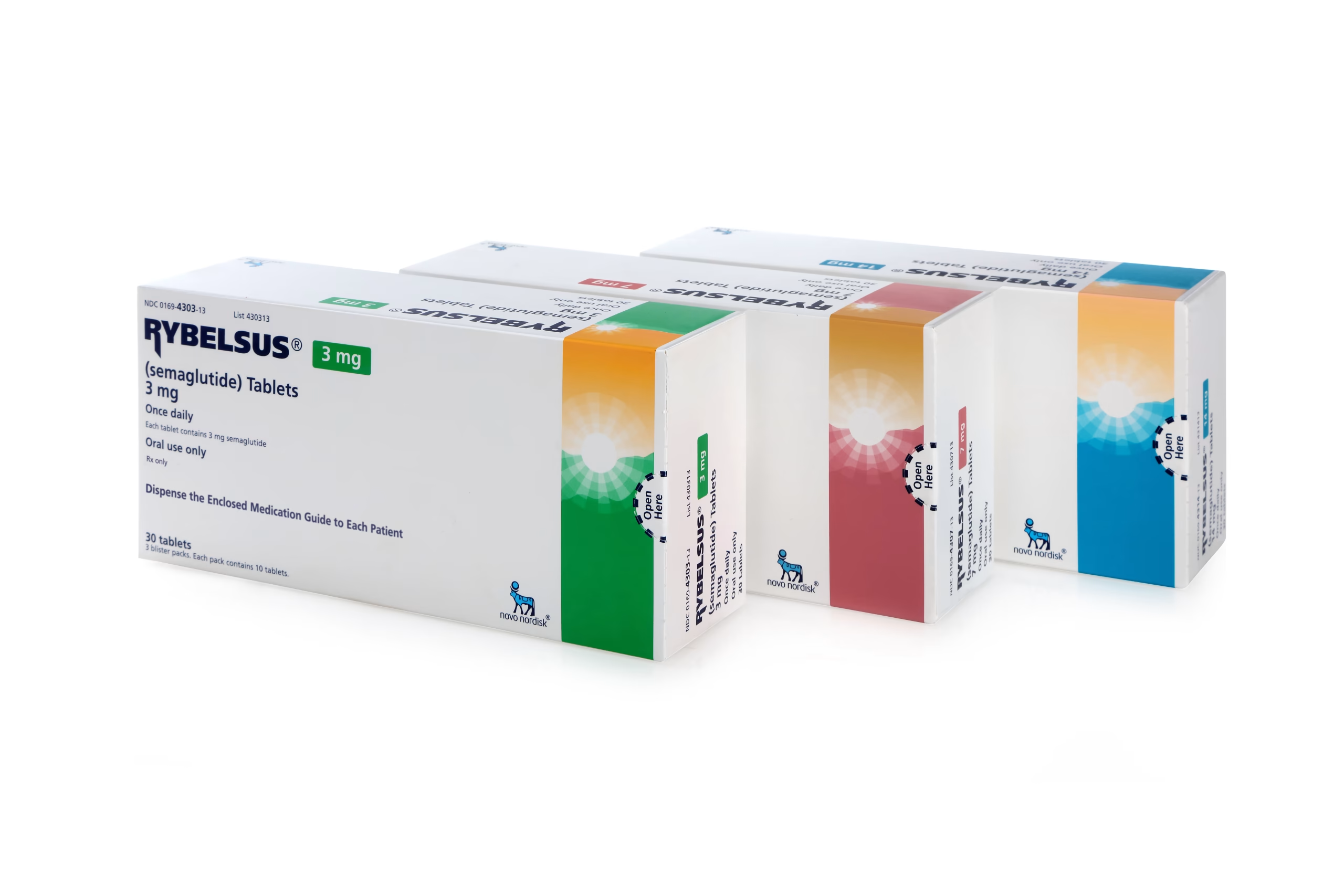
Buy Semaglutide
Price range: $89.00 through $9,160.00
Buy Semaglutide (5mg) – Gold-Standard GLP-1 Receptor Agonist
Looking to buy Semaglutide for high-fidelity metabolic studies? Our research-grade Semaglutide is the industry benchmark for investigating GLP-1 receptor agonism, appetite regulation, and glycemic control. As a long-acting analog of native GLP-1, it features a unique acylated structure that provides an extended half-life, making it the premier choice for chronic research into the gut-brain axis and metabolic energy balance.
Product Highlights:
-
High-Affinity Agonist: Targets the GLP-1 receptor with superior stability to investigate insulin secretion and glucagon suppression.
-
Extended Research Half-Life: Acylated with a C18 fatty diacid side chain, providing approximately 165 hours of bioactivity in research models.
-
Versatile Applications: The leading tool for studies on obesity, Type 2 Diabetes, MASH (fatty liver), and emerging neuroprotective research.
-
Laboratory Precision: Guaranteed 99% or higher purity (HPLC/MS verified) in a vacuum-sealed, lyophilized format to ensure reproducible experimental data.
When you buy Semaglutide from a specialized research supplier, you ensure your facility has access to the most reliable and extensively peer-reviewed secretagogue for modern metabolic discovery.
Note: For laboratory research use only.
Buy Semaglutide: The Essential Research Guide to the Gold-Standard GLP-1 Receptor Agonist
In the landscape of modern metabolic pharmacology, Semaglutide stands as the definitive benchmark for Glucagon-Like Peptide-1 (GLP-1) receptor agonism. When you look to buy Semaglutide for your laboratory, you are acquiring a compound that has revolutionized the study of energy homeostasis, glycemic regulation, and neuroendocrine signaling.
As a long-acting analog of the naturally occurring incretin hormone GLP-1, Semaglutide offers researchers a robust platform for investigating chronic metabolic conditions, ranging from Type 2 Diabetes to neurodegenerative disorders. Its unparalleled stability and high affinity for the GLP-1 receptor make it the most widely utilized research tool in current metabolic science.
1. What is Semaglutide? A Molecular Breakdown
Semaglutide is a synthetic 31-amino acid peptide that shares 94% structural homology with human GLP-1 (7-37). However, it features three critical modifications that dramatically enhance its utility in a research setting:
- Amino Acid Substitution at Position 8: The replacement of alanine with alpha-aminoisobutyric acid (Aib) protects the peptide from rapid degradation by the enzyme dipeptidyl peptidase-4 (DPP-4).
- Acylation at Lysine 26: The attachment of a C18 fatty diacid side chain via a spacer allows the molecule to bind reversibly to albumin, extending its half-life to approximately 165 hours in research models.
- Substitution at Position 34: The replacement of lysine with arginine prevents unintended acylation at other sites, ensuring structural uniformity.
When researchers buy Semaglutide, they are typically sourcing it in a lyophilized (freeze-dried) format at 99% purity, ensuring that experimental results are free from the interference of truncated peptide chains or residual synthesis solvents.
Technical Chemical Profile
| Molecular Formula | C187H291N45O59 |
| Molecular Weight | 4113.58 g/mol |
| CAS Number | 910463-68-2 |
| Format | White, vacuum-sealed lyophilized powder |
2. Mechanism of Action: The Gut-Brain Axis
The primary motivation to buy Semaglutide for scientific inquiry is to explore its potent activation of the GLP-1 receptor (GLP-1R). This receptor is widely expressed across multiple systems.
A. Pancreatic Glucoregulatory Effects
Semaglutide stimulates the secretion of insulin from pancreatic beta cells in a glucose-dependent manner. Simultaneously, it suppresses the secretion of glucagon from alpha cells when blood glucose levels are elevated. Researchers utilize this to study “precision glycemic control.”
B. Gastric Emptying and Nutrient Absorption
By slowing gastric motility, Semaglutide modulates the rate at which nutrients enter the small intestine. This delayed gastric emptying is a key area of study for researchers investigating postprandial glucose spikes and satiety signals.
C. Central Nervous System (CNS) Signaling
Semaglutide crosses the blood-brain barrier to target receptors in the hypothalamus and hindbrain. It enhances satiety signals and reduces the rewarding value of food, making it an essential tool for research into the neurobiology of obesity.
3. High-Fidelity Research Applications in 2026
While its role in weight management is well-documented, laboratories are increasingly choosing to buy Semaglutide for frontier applications:
Neurodegeneration and Cognitive Health
Emerging data in 2026 suggests that GLP-1 agonists possess neuroprotective properties. Research is investigating Semaglutide’s ability to reduce neuroinflammation and potentially slow the progression of Alzheimer’s and Parkinson’s disease in preclinical models.
Cardiovascular and Endothelial Function
Researchers study Semaglutide to observe its effects on vascular inflammation, blood pressure regulation, and lipid profiles, investigating the reduction of major adverse cardiovascular events (MACE).
MASH (Metabolic Dysfunction-Associated Steatohepatitis)
By improving insulin sensitivity, Semaglutide is a leading subject for research into the reversal of hepatic steatosis (fatty liver). Studies monitor the reduction of liver enzymes and fibrotic markers.
4. Technical Specifications and Synthesis Standards
To ensure the integrity of your experimental data, the Semaglutide you purchase must meet elite-level standards:
- High Purity (HPLC): A purity level of ≥99% is mandatory to prevent cross-reactivity.
- Mass Spec (MS) Validation: Confirms the molecular weight and correct acylation profile.
- TFA Removal: Our synthesis process ensures the removal of Trifluoroacetic acid (TFA), which can be toxic to cell cultures.
5. Handling, Reconstitution, and Storage
Reconstitution Protocol
- Use Bacteriostatic Water or sterile saline as the diluent.
- Gently introduce the liquid by aiming at the vial wall. Do not spray directly onto the powder.
- Gently swirl or tilt the vial. Never shake, as mechanical agitation can denature the peptide.
Storage Stability
- Lyophilized (Dry): Store at -20°C for up to 2 years.
- Reconstituted (Liquid): Must be kept refrigerated at 2°C to 8°C. Use within 30 days. Avoid repeated freeze-thaw cycles.
6. Why Buy Semaglutide for Modern Research?
As the “standard of care” in incretin research, Semaglutide provides a stable control against which newer multi-agonists are measured. By choosing to buy Semaglutide, your laboratory secures a compound with extensive peer-reviewed data and reliable bioavailability.
7. Summary of Scientific Potential
Semaglutide remains the cornerstone of metabolic research. Its ability to simultaneously modulate pancreatic, gastric, and neurological pathways offers a comprehensive window into the mechanics of energy regulation. Whether your focus is metabolic syndrome or neuro-metabolic health, Semaglutide is an indispensable asset for any laboratory in 2026.
| Quantity | 5mg*10vials, 10mg*10vials, 20mg*10vials, 1g raw, 100g raw |
|---|
Be the first to review “Buy Semaglutide”
Related products
Product
Product
Product
Product

Product
Product
Product
Product
Reviews
There are no reviews yet.