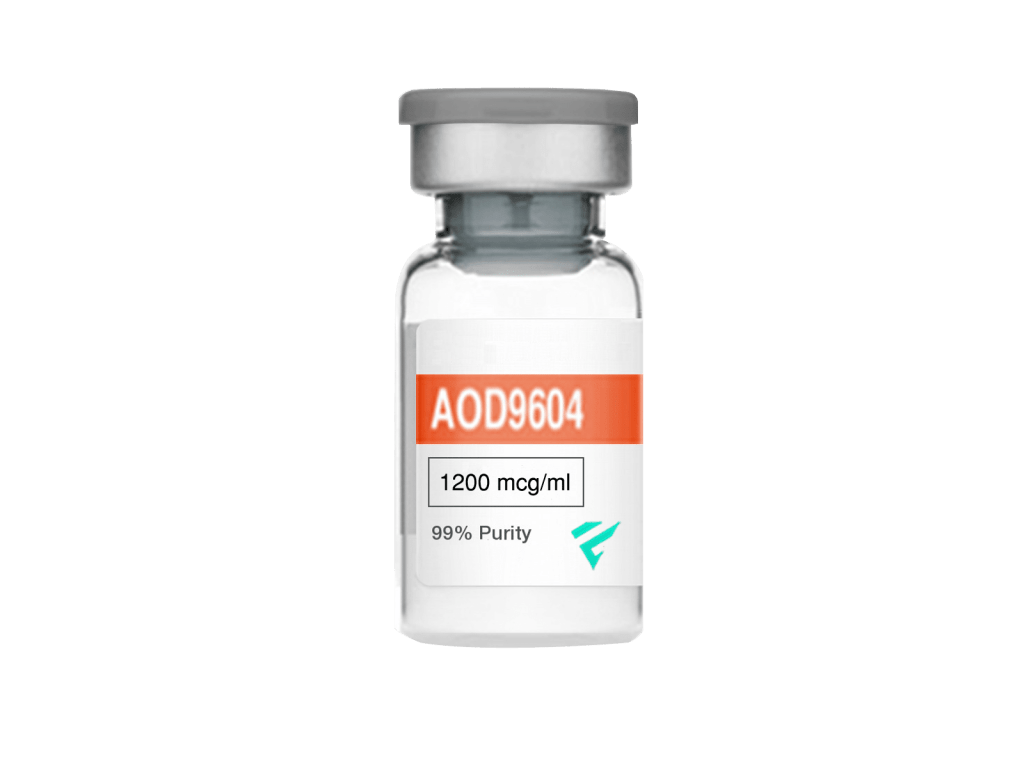
Buy AOD-9604 – Anti Obesity Peptide
Price range: $58.00 through $110.00
Buy AOD-9604 (5mg) – Targeted Lipolytic HGH Fragment 177-191
Enhance your metabolic research with AOD-9604, a high-purity synthetic peptide representing the C-terminal fragment of Human Growth Hormone. Specifically engineered to isolate the fat-burning properties of HGH, AOD-9604 allows researchers to study lipolysis and the inhibition of lipogenesis without the growth-promoting (IGF-1) or insulin-interfering side effects associated with the full-length hormone.
Product Highlights:
-
Pure Lipolytic Action: Stimulates the breakdown of lipids by targeting beta-3 adrenergic receptors in adipocytes.
-
Metabolic Precision: Studied for its ability to reduce body fat without impacting blood glucose levels or insulin sensitivity.
-
Regenerative Potential: Emerging research highlights its role in investigating cartilage repair and chondrogenesis in osteoarthritis models.
-
Laboratory Grade: Guaranteed 99% or higher purity (HPLC/MS verified) in a stable, vacuum-sealed lyophilized format.
When you buy AOD-9604 for your facility, you are choosing a compound that bridges the gap between traditional endocrine research and modern regenerative medicine, offering a superior safety profile for chronic metabolic studies.
Note: For laboratory research use only.
Buy AOD-9604: The Advanced Researcher’s Guide to the Lipolytic Fragment 177-191
Buying AOD-9604 (Anti-Obesity Drug 9604) for laboratory research requires a deep understanding of its unique molecular structure and its specific role in lipid metabolism. This comprehensive guide serves as an authoritative resource for researchers looking to buy AOD-9604, detailing its biochemical properties, mechanisms of action, and the latest preclinical findings.
In the complex landscape of metabolic research, the quest for a compound that can isolate the fat-burning properties of Human Growth Hormone (HGH) without its systemic side effects has led to the development of AOD-9604. When you look to buy AOD-9604, you are acquiring a specialized peptide fragment that represents the C-terminal end of the HGH molecule (specifically residues 177–191).
In 2026, AOD-9604 remains one of the most studied peptides for its potential to modulate lipid metabolism, investigate obesity treatments, and explore regenerative medicine—all while maintaining a superior safety profile compared to full-length HGH.
1. What is AOD-9604? A Molecular Overview
AOD-9604 is a synthetic analog of the human growth hormone-releasing factor. It was originally developed by researchers to mimic the lipolytic (fat-burning) effects of HGH.
Unlike the full 191-amino acid HGH chain, AOD-9604 is a small, 16-amino acid peptide fragment. The key structural difference is that AOD-9604 does not contain the parts of the HGH molecule responsible for promoting growth (the IGF-1 response) or interfering with insulin sensitivity. This makes it a “pure” lipolytic research tool.
Chemical Profile and Structure
- Sequence: Tyr-Leu-Arg-Ile-Val-Gln-Cys-Arg-Ser-Val-Glu-Gly-Ser-Cys-Gly-Phe
- Molecular Formula: C78H123N23O23S2
- Molecular Weight: 1815.1 g/mol
- CAS Number: 221231-10-3
2. The Mechanism of Action: Targeted Lipolysis
The reason researchers prioritize the decision to buy AOD-9604 over other metabolic agents is its targeted mechanism. It works primarily through two distinct biological pathways:
A. Stimulation of Lipolysis
AOD-9604 mimics the way natural Growth Hormone regulates fat metabolism. It stimulates the breakdown of lipids and the destruction of fat cells (adipocytes) by enhancing the activity of beta-3 adrenergic receptors. This specific stimulation triggers the release of fatty acids into the bloodstream to be used as energy.
B. Inhibition of Lipogenesis
Beyond burning existing fat, AOD-9604 is studied for its ability to prevent lipogenesis—the process of converting non-fat food materials (like carbohydrates) into body fat. In laboratory models, this dual-action approach makes it highly effective for metabolic management research.
3. Why Researchers Choose AOD-9604 Over Full HGH
A significant hurdle in endocrine research is the side-effect profile of full-length HGH. When you buy AOD-9604, you are researching a compound that effectively bypasses the most problematic HGH issues:
- No Impact on Blood Sugar: Full HGH can cause insulin resistance and hyperglycemia. AOD-9604 does not compete for insulin receptors, meaning it has no adverse impact on blood glucose levels.
- No IGF-1 Spikes: While IGF-1 is necessary for muscle growth, excessive spikes can lead to organ enlargement. AOD-9604 does not stimulate the production of IGF-1, focusing solely on fat metabolism.
- Specific Target: AOD-9604 targets “obese” fat cells more aggressively than “lean” cells, allowing for more nuanced metabolic studies.
4. Expanding Frontiers: AOD-9604 in Regenerative Medicine
While its name implies “Anti-Obesity,” modern research has uncovered a secondary, highly promising application: cartilage and bone repair.
Recent studies have shown that AOD-9604, when administered in conjunction with other regenerative peptides, may stimulate the production of chondrocytes (the cells responsible for cartilage). This makes it a subject of high interest for laboratories focusing on:
- Osteoarthritis: Investigating the regeneration of joint surfaces.
- Bone Density: Studies on how peptide fragments influence mineralization.
- Tendon Healing: Researching the synergistic effects of metabolic fragments on soft tissue recovery.
5. Technical Specifications for Laboratory Use
To ensure your laboratory data is reproducible, the AOD-9604 you purchase must meet these rigorous standards:
- Purity: ≥99% (Verified by HPLC and Mass Spectrometry).
- Appearance: Lyophilized white powder.
- Solubility: Soluble in water or 1% acetic acid.
- Format: Vacuum-sealed in sterile vials for long-term stability.
6. Handling, Reconstitution, and Storage
Peptides are fragile biological chains. To maintain the integrity of the molecule after you buy AOD-9604:
Reconstitution
- Use Bacteriostatic Water or sterile saline.
- Gently introduce the liquid by letting it slide down the side of the vial.
- Do not shake; gently swirl until the solution is clear.
Storage Stability
- Lyophilized Powder: Store at -20°C for up to 24 months.
- Reconstituted Solution: Store at 2°C to 8°C and use within 14 days for maximum potency.
7. Buying AOD-9604 in 2026: Sourcing and Quality Control
The market for research peptides is vast, but quality varies significantly. When you buy AOD-9604, it is imperative to verify the source.
- Third-Party Testing: Always request a Certificate of Analysis (CoA) for the specific batch.
- Synthesis Origin: Ensure the peptide was synthesized in a facility that follows cGMP guidelines to avoid heavy metal contamination or residual solvents (TFA).
- Stability Testing: Quality suppliers will provide data on the peptide’s stability during transit.
8. Summary of Scientific Potential
AOD-9604 represents a bridge between traditional endocrinology and modern precision medicine. Its ability to decouple the lipolytic effects of HGH from its growth-promoting actions allows researchers to isolate metabolic variables with surgical precision. Whether your laboratory is focusing on obesity, metabolic syndrome, or chondrogenesis, AOD-9604 provides a stable and effective platform for advanced inquiry.
| Quantity | 2mg*10vials, 5mg*10vials, 10mg*10vials |
|---|
Be the first to review “Buy AOD-9604 – Anti Obesity Peptide”
Related products
Product
Product
Product
Product
Product
Product
Product
Product
Reviews
There are no reviews yet.