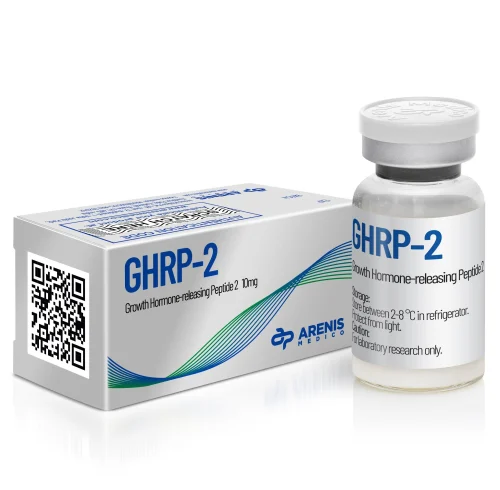
GHRP-2 Acetate
Price range: $60.00 through $75.00
Here is the copy-paste friendly short description for GHRP-2 Acetate, designed for quick scanning and optimized for search engine relevance.
Order GHRP-2 Acetate (5mg) – High-Purity Growth Hormone Secretagogue
Enhance your endocrine research with GHRP-2 Acetate, a potent second-generation growth hormone-releasing peptide. Recognized for its superior potency over first-generation secretagogues, GHRP-2 Acetate is an essential research tool for investigating pituitary function, pulsatile growth hormone secretion, and the regulation of metabolic pathways without the significant appetite stimulation associated with other GHRPs.
Product Highlights:
-
Maximized GH Secretion: Stimulates a rapid and intense release of endogenous growth hormone via the GHSR-1a receptor.
-
High Selectivity: Offers a more refined action on growth hormone pulses with moderate effects on prolactin and cortisol.
-
Metabolic Research: Primary application in studies involving lean mass preservation, cellular repair, and bone density.
-
Scientific Grade: Guaranteed 98% or higher purity (HPLC/MS verified) in a stable, lyophilized format.
GHRP-2 Acetate is the preferred choice for laboratory researchers seeking high-impact data on growth hormone signaling and somatotropic axis modulation in diverse research models.
GHRP-2 Acetate: Advanced Growth Hormone Releasing Peptide for Precision Research
When you integrate GHRP-2 Acetate (Growth Hormone Releasing Peptide-2) into your laboratory studies, you are utilizing a potent second-generation hexapeptide secretagogue. GHRP-2 Acetate is a synthetic agonist of ghrelin, the endogenous ligand that binds to the growth hormone secretagogue receptor (GHSR). It is widely recognized in the scientific community for its superior ability to stimulate the pituitary gland to release endogenous growth hormone (GH) with greater intensity than many first-generation peptides.
What is GHRP-2 Acetate?
GHRP-2 Acetate is a sterile, lyophilized hexapeptide with the amino acid sequence D-Ala-D-2-Nal-Ala-Trp-D-Phe-Lys-NH2. While it belongs to the same family as GHRP-6, GHRP-2 Acetate is distinguished by its higher potency and more focused action. It works by stimulating the natural pulsatile release of GH through two pathways: by directly signaling the pituitary gland and by suppressing the inhibitory effects of somatostatin.
Researchers prefer GHRP-2 when they require a peptide that provides a significant growth hormone spike while causing a more moderate increase in appetite compared to other ghrelin mimetics.
Key Research Benefits and Mechanism of Action
Utilizing GHRP-2 Acetate in experimental protocols offers comprehensive data across several metabolic and endocrine areas:
-
Superior GH Secretion: GHRP-2 is noted for producing one of the highest peaks in GH secretion among the GHRP family, making it ideal for pituitary function testing.
-
Selectivity and Control: It offers a more controlled orexigenic (appetite-stimulating) effect, allowing researchers to study growth factors without the massive dietary fluctuations seen in GHRP-6 models.
-
Calcium Channel Modulation: Research shows that GHRP-2 acts on the pituitary by increasing calcium ion influx, providing insights into cellular signaling and ion channel behavior.
-
Muscle and Connective Tissue Research: Studies explore its role in stimulating protein synthesis, systemic recovery, and the preservation of lean body mass in specialized research models.
Technical Specifications
To ensure the integrity of your research data, confirm these technical parameters for GHRP-2 Acetate:
-
CAS Number: 158861-67-7
-
Molecular Formula: C45H55N9O6 (as base)
-
Molecular Weight: 817.9 g/mol
-
Sequence: D-Ala-D-2-Nal-Ala-Trp-D-Phe-Lys-NH2
-
Purity: 98% or higher (HPLC and Mass Spectrometry verified)
-
Appearance: Fine white lyophilized powder
-
Solubility: Soluble in Water or 1% Acetic Acid
Handling and Storage Guidelines
To maintain the structural integrity and bioactivity of GHRP-2 Acetate:
-
Storage: Store the lyophilized powder at -20 degrees Celsius. For long-term preservation (over 12 months), -80 degrees Celsius is recommended to prevent degradation.
-
Reconstitution: Use sterile bacteriostatic water or sterile saline. Allow the liquid to flow slowly down the side of the vial and swirl gently; avoid aggressive shaking to protect the peptide chain.
-
Stability: After reconstitution, store the solution at 2 to 8 degrees Celsius. For maximum experimental consistency, use the solution within 14 to 20 days.
Why Research with GHRP-2 Acetate?
In the landscape of 2026, GHRP-2 Acetate remains a primary candidate for investigating growth hormone deficiency, age-related metabolic decline, and the regulation of the somatotropic axis. Its predictable pharmacokinetic profile and high receptor affinity make it a reliable choice for generating reproducible, high-impact data. Always ensure your supplier provides a full Certificate of Analysis (CoA) to verify purity levels and the absence of impurities like TFA.
Research Disclaimer: This product is intended strictly for laboratory research and in vitro use.
| Quantity | 5mg*10vials, 10mg*10vials |
|---|
Be the first to review “GHRP-2 Acetate”
Related products
Product
Product
Product
Product
Product
Product
Product
Reviews
There are no reviews yet.